
How to organise and donate toiletries
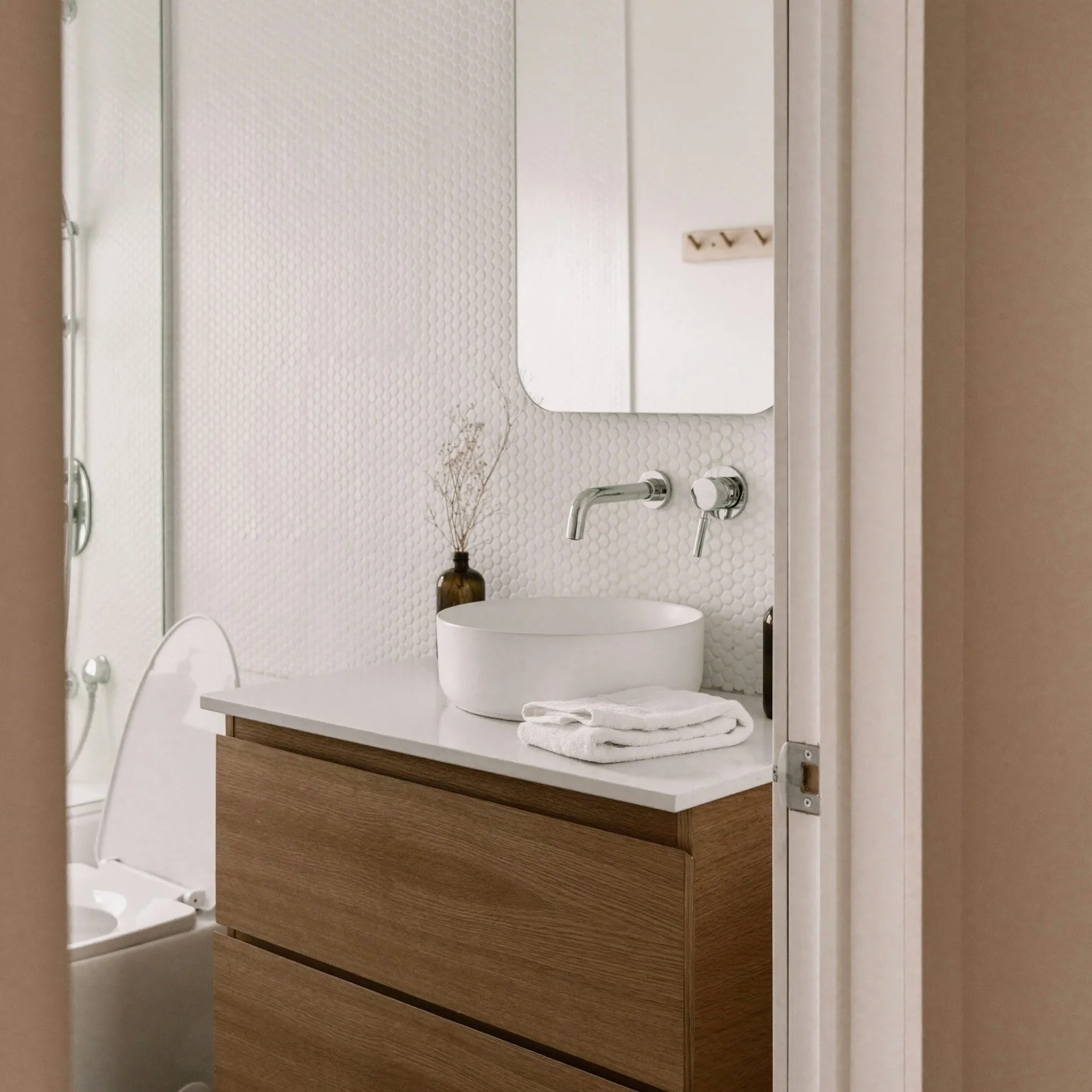
When it comes to organising bathrooms, one thing is clear. Most of us have way too many toiletries. We buy things impulsively when we see a new product on Instagram or we want to try something different just for the sake of it. We convince ourselves we need duplicates "just in case" and we hold on to products past their expiration date because we feel guilty if we let them go. Over time this way of behaving leads to an excess of products, many of which sit unused and forgotten at the back cupboards for years. The result is a cluttered bathroom that feels overwhelming and certainly not the calm oasis we envisioned.
The good news is that shifting a bathroom from cluttered chaos to organised calm can be achieved in couple of hours. What really creates lasting change however is the behaviour shift it triggers during the process. Here’s my top tips on how to get started, how to become more mindful about what you buy and why, and how to donate any toiletries you no longer want to those in need. Let’s begin.
Step 1: Categorise
Start by removing all your toiletries from your bathroom drawers, cupboards, shelves, cabinets, floors and surfaces and place all like-for-like products together in one pile. So for example, place all your shampoos together and all your body lotions together. If you have several bathrooms, collect everything from each bathroom and sort through all the products at once. If you have any empty boxes or containers use them to help keep each category together. Placing everything into categories forces you to make decisions on what to keep based on comparison but it also helps you to become acutely aware of just how many products you have bought over the years. This is an important step, more on why later on.
As you sort through your products check if anything has expired. Look for the POA (Period After Opening) symbol on the packaging, which looks like a small open jar with a number next to it. This symbol shows you how long a cosmetic or toiletry product is safe and effective to use after it has been opened for the first time. The number is usually 6 or 12 months. If you have had something in your cupboard for years - you can be rest assured it has expired so you should empty it and recycle the packaging. If it smells odd too, it’s time to let it go.
Step 2: Select your everyday items
Once everything has been categorised, scan through each category group and pick out the products that you love to use and use frequently. It might be because it’s a great product to use or you love the smell. Whatever your reason, collect them all together and put them to one side. These will become your ‘everyday’ toiletries and will be given priority position in your bathroom on a shelf or a surface so they are easy to grab and use (see step 5). If you have three bathrooms, select three of the same product from each category - so three shampoos - ready to place in each bathroom. Give each product a wipe down as you go. It will make them feel like new again and more attractive.
Step 3: Select your backfill items
For all the remaining products it’s now time to pick out any that you like but maybe forgot about because they were hidden at the back of the cupboard. Be honest with yourself though, don’t keep a product if you know you really don’t like it and will never use it again. If you never liked the smell or it made your hair feel dry and brittle, it’s time to let it go. Put the ones that you know you will use in a shallow open tray or box and set to one side. These will become your ‘backfill’ products and will be positioned in the bathroom so that they are out of sight but still accessible, like inside a cupboard. You only need one backfill box, regardless of how many bathrooms you have.
Now, when one of your everyday items run out like your favourite shampoo, instead of buying a new shampoo go to your backfill box and get one of your backfill shampoos rather than buying a new one.
Step 4: Donate
Once you have selected all of your everyday products and your backfill products, it’s now time to decide what to do with the remaining products. In order to donate any products you first have to make sure the product has not been opened. If it has been lightly used then a homeless shelter may take it but the majority won’t but if you have unopened toiletries then these can be donated to someone in need. Today there are 4.2 million adults in the UK who cannot afford to stay clean because they can’t afford everyday hygiene and personal grooming products that most of take for granted, like shampoo, laundry detergent, tampons, nappies and toothpaste. The good news is there are several ways you can donate to charities dedicated to hygiene poverty.
The Hygiene Bank collects unused and in date toiletries and cleaning products and has multiple drop off locations around the UK, mostly in Boots. You can find your nearest drop off point here. Unfortunately there are no Hygiene Banks currently in Cheshire.
Toiletries Amnesty is an award-winning NGO working to end hygiene poverty and divert beauty industry waste. It provides toiletries and hygiene products to over 7.5 million people around the world. You can find the nearest drop off point here. In Cheshire there are currently five drop off points, two of which are in Chester. The Cheshire and Warrington Carers Trust is located in the Bluecoat Building Northgate Street Chester CH1 4EE. They are open 9.30am to 4.30pm but please call 01244 400502 beforehand to make sure someone will be there to accept your donation. The other Chester based location is Bridge Foyer, a homeless shelter located at Tower Road in Chester CH1 4JR. Ring the bell and say you are donating to Toiletries Amnesty and they will open the door. They are open 24/7.
Beauty Banks is a non-profit charity that collects, re-packages and distributes self-care and hygiene products to those in need, through partnerships with registered food banks, domestic abuse charities, homeless shelters, NHS trusts and care leaver associations. They also help schools to support children living in hygiene poverty. You can donate used and unopened toiletries in 100 participating Superdrug stores in most big cities around the UK including Glasgow, Dundee, Edinburgh, Aberdeen, Kent, Canterbury, Frome and Manchester. You can also donate to Beauty Banks directly via DropPoint.
Lastly, some more familiar charity shops, such as Oxfam, will accept unused toiletries but it is worth calling them beforehand to check if they do, as not all charity shops accept unused toiletries.
Step 5: Organise
Now comes the fun part, organising your bathroom with the toiletries you decided to keep. First, pick up your everyday products you set aside right at the beginning of this process. These should now be individually placed where they are easy to grab and use. Try to keep your surfaces as clear as possible in the process as it not only looks better but it’s easier to keep clean.
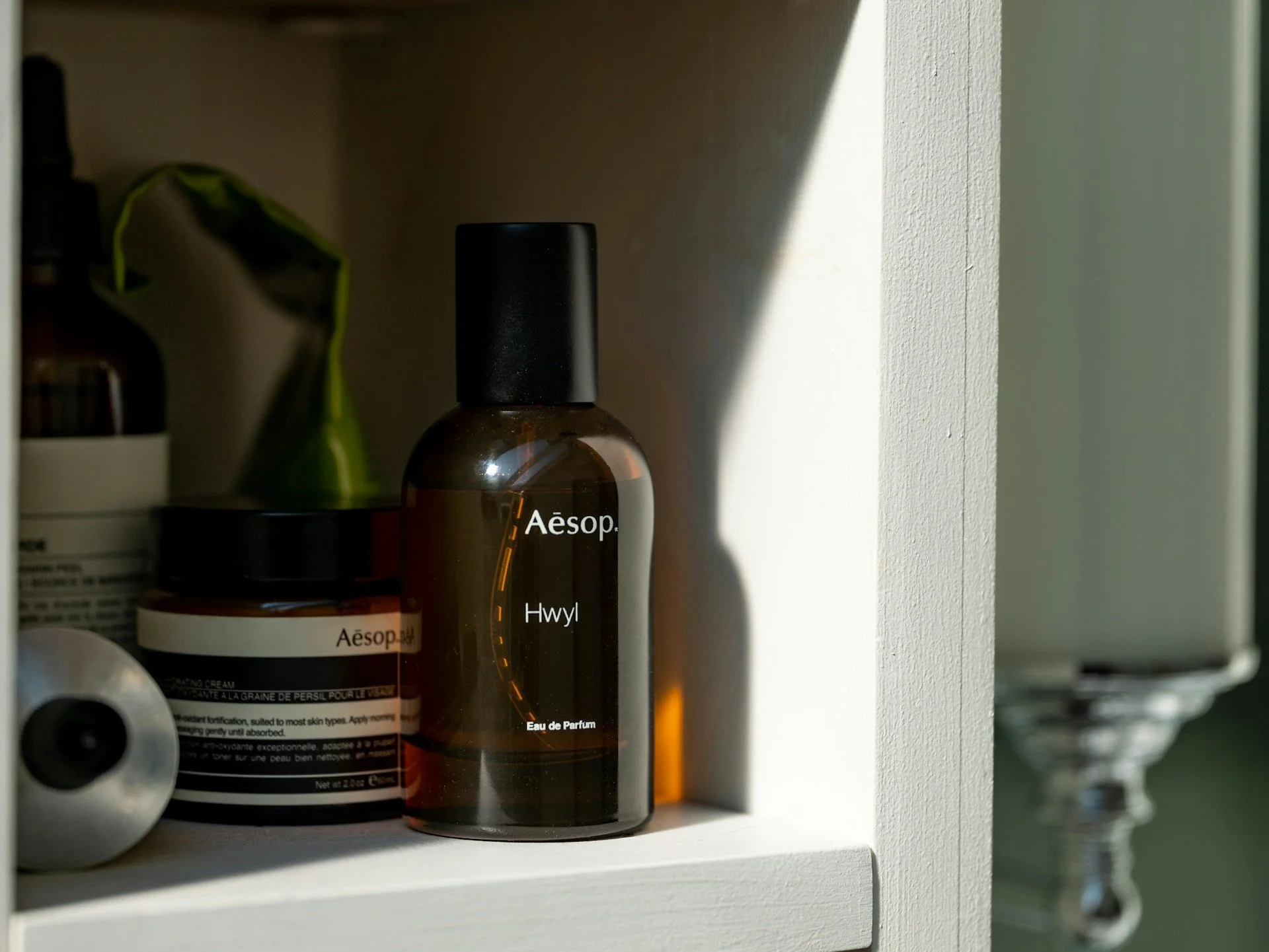
Place your everyday products on a shelf or surface so they are easy to reach and use
Now, pick up your backfill tray of products. These are the items you have decided to keep but they will only be used when one of your everyday products runs out. Place the tray of products in your bathroom cupboard or put them on a bathroom shelf in a box. Every time you think about buying a new product, like a shampoo, go to your backfill box first and select the next shampoo or soap. This is the behaviour shift you need to adopt. It might take you a year to use up all of the backfill products but by following this process I guarantee not only will you start to appreciate what you already own but you will also become more mindful of what you buy in the future and why - and by default your bathroom will look and feel uncluttered.
Heather Martin
Hello, I am designer with over 30 years of experience who retrained to become a professional home organiser. I am also a certified KonMari Consultant and the founder of The Organising Experts®. We help clients throughout Cheshire to declutter and organise their homes creating transformational results. If you are curious to learn more please reach out and book a free 30-minute consultation call to talk through what you need and how we can help.